
The box in the cupboard: what to do with a lifetime of family photographs
You opened it on a Tuesday, most likely, for no particular reason.
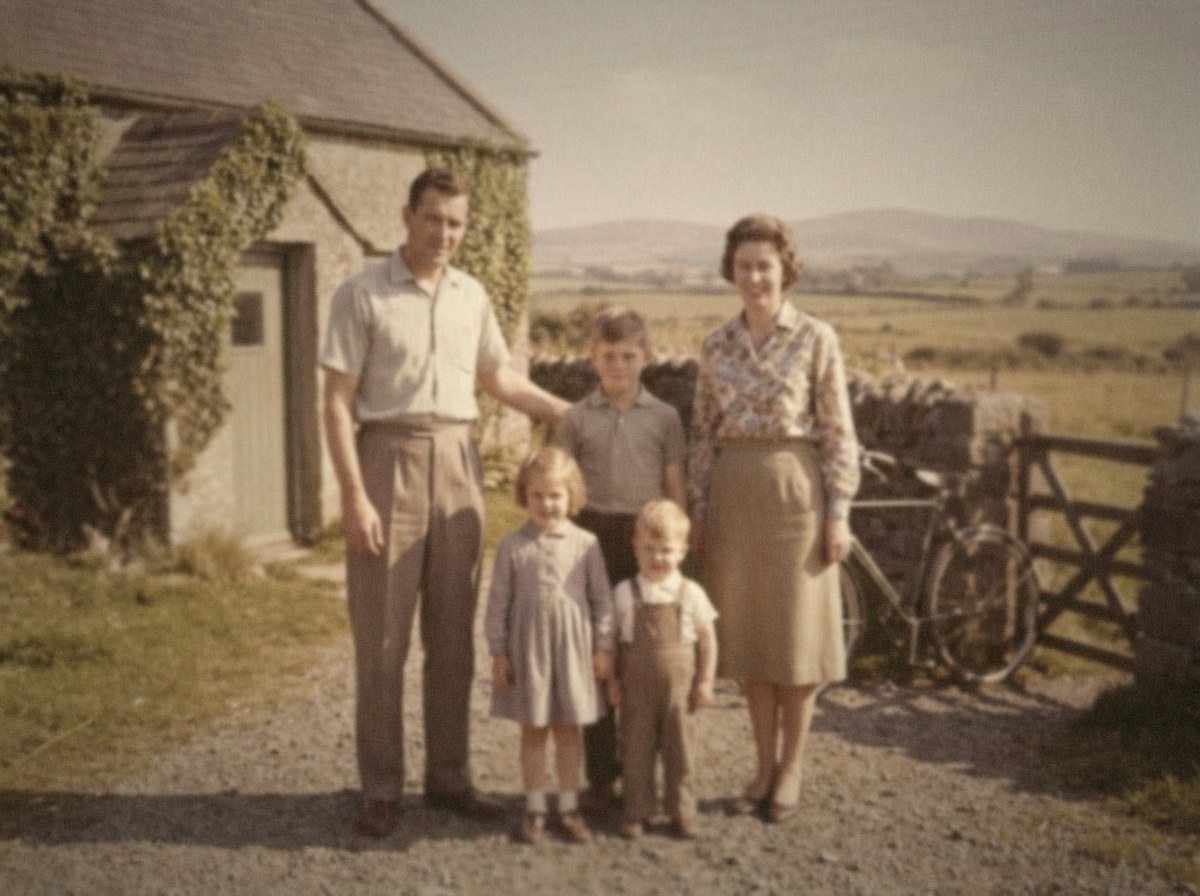
The box had been at the back of the cupboard long enough that the lid had gone soft at the corners. Inside, the whole family is waiting: your mother at nineteen, in a dress you have never seen her wear; a holiday where all four of them are standing in front of a car; a wedding in black and white with a crease straight down the middle; your grandfather, who died before you could ask him anything, caught mid-sentence, laughing at something the picture did not keep.
You put the lid back on. Not because you did not care. Because there was so much of it, and it is all going the same way, and you did not know where to start.
So here is where to start.
Start with people, not places
The photographs that matter are the ones with faces in them, and the ones that matter most have several generations in the same frame. A photograph of a beach will always be a photograph of a beach. A photograph of your mother standing next to her own mother is the only copy of that Tuesday that exists anywhere.
Put the landscapes, the houses and the cars in one pile, and the people in another. The second pile is the one to work from.
Then choose by the light in the room, not the damage
If you had to pick one rule for choosing, it would be this: choose the photograph where the faces are clearest, even if it looks worse in other ways.
A picture with a water stain across one corner and four smiling faces comes back beautifully. A picture of the same four people taken at dusk, where the faces have gone soft and dim, is harder to bring up. Send the sharper one first. Seeing that first face come back clear is what turns the rest of the box into a pleasure rather than a job.
Send one, not forty
This is where most people stop, and there is no wrong way to begin. You do not need to sort the box. You do not need to order anything, or date anything, or decide what to do with the ones that look hopeless.
Choose one photograph. The one you would rescue first if the house were on fire. Send it as it is, on the flat of a table in daylight, photographed from above, and let it come back to you.
Then choose the second one, because now you know what this is.
The ones that surprise you
Then there are the ones you nearly did not send. The stain across the middle, the corner torn away, the mottling that has crept over a face. Time leaves a great deal on a photograph, and most of it can be lifted off, which is why the picture you had written off is so often the one that moves people most when it comes back.
Where a photograph has genuinely lost something, a piece of the picture that is simply not there any more, you will hear it from us before you pay anything. It is your family in the frame, and you should know what we can bring back before you spend a penny on it.
And then the funniest thing happens
The photographs you have brought back do not stay in the folder. They get printed, and framed, and sent to cousins who have not spoken in years, and put on the mantelpiece where the light is, and photographed again by somebody’s phone so they can be sent on.
Somebody’s grandchild asks who the little girl is, and receives an answer, and a name, and a story. That is the whole point of the box. Not that it was kept, but that it is opened.
You already know which photograph you would rescue first. Take it out of the box, lay it on the table, photograph it where it lies and upload that. Nothing goes in the post, and the original stays with you.
The rest can wait another week, the way it has waited forty years.
Questions people ask
The photographs are stuck together. Can they still be used?
Please do not force them apart, because that is how the surface comes away. If the one you care about is on top, photograph the pair as flat as you can and send that. If it is the one underneath, it cannot be recovered from a photograph of the two, and we will say so rather than take your money.
How should I copy them, with a scanner or a phone?
Both work. A scanner at a high setting gives the most to work with. A phone is perfectly good if the photograph is laid flat in daylight, photographed from directly above, with your shadow out of the frame.
Which photographs should I choose first?
The ones with faces, and especially the ones where several generations are together. A group where everybody is looking at the camera carries the most, and it is usually the one that gets framed.
Some of them look hopeless. Should I send those too?
Send them. Water stains, deep creases and dust respond better than people expect, and we will tell you honestly before anything is paid if part of a picture cannot be saved.
Do I have to send the whole box?
No. Send one or two and see what comes back. Most people start with a single photograph and then bring the rest out of the cupboard, one at a time, over the following weeks.
Upload a photograph and see it repaired
You will see the result before you pay anything, and you keep the watermarked copy either way.
Start: Pick a PhotoFree to repair. The free copy carries our watermark, which is what keeps it free.